

Talent intelligence platforms analyze skills, workforce, and labor market data to help organizations make informed hiring and workforce planning decisions. By combining internal workforce data with external market insights, these platforms enable organizations to identify skills gaps, understand talent availability, and anticipate hiring trends in increasingly competitive labor markets.
As organizations move toward skills-based hiring and navigate tighter, more dynamic talent markets, talent intelligence software have become essential for building competitive, future-ready workforces.
In this blog, we explore the top 15 talent intelligence platfs, highlighting their key capabilities and how they support modern hiring and workforce planning needs.
Key Features to Look for in Talent Intelligence Platform
- Skills Intelligence & Mapping: Helps organizations identify and organize skills across candidates, employees, and roles, making it easier to spot skills gaps and support skills-based hiring and internal mobility.
- Talent Market Insights: Provides visibility into external labor market trends such as talent availability, in-demand skills, and location-based insights to guide sourcing and hiring strategies.
- Workforce Planning: Analyzes workforce data to help organizations plan future hiring needs, align talent with business goals, and prepare for workforce changes.
- Predictive Analytics: Uses data to forecast hiring trends, skills demand, and potential workforce risks, enabling proactive and informed decision-making.
- Data Integration: Connects with ATS, HRIS, and other HR systems to unify talent data and ensure insights are accurate, up to date, and actionable.
|
Table of Contents |
Top 15 Talent Intelligence Platforms in 2026
1. iMocha
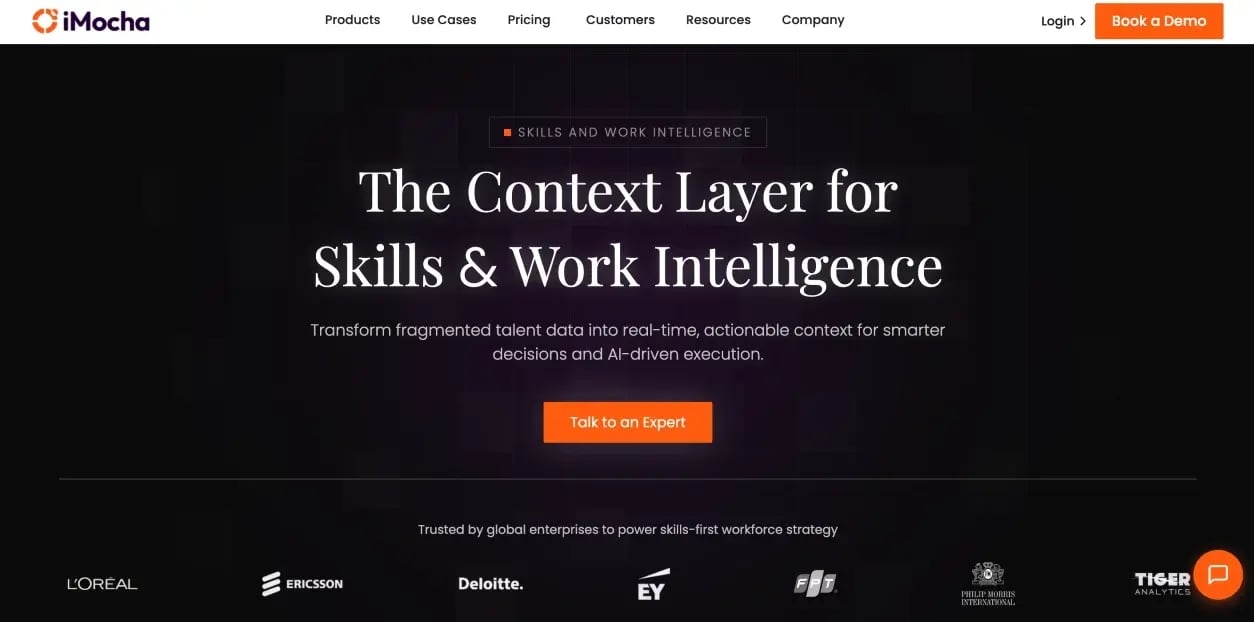
iMocha is a AI-powered talent intelligence platform that helps organizations assess, map, and analyze skills across candidates and employees. It provides structured skills data that supports skills-based hiring and workforce decisions. The platform enables organizations to identify skill gaps, benchmark capabilities, and align talent with business needs.
Best for: Enterprises adopting a skills-first approach to workforce planning, internal mobility, and succession planning.
Key features:
- Skills intelligence: Creates a centralized view of workforce skills by combining data from assessments, employee profiles, job roles, and HR systems.
- AI-powered skills inference: Identifies and validates employee and candidate skills using AI to build dynamic, up-to-date skills profiles.
- Skills gap analysis: Detects current and future skills gaps across individuals, teams, and the organization to support workforce planning.
- Internal talent matching: Matches employees to internal roles, projects, and career opportunities based on verified skills and proficiency levels.
- Strategic workforce planning: Provides insights into workforce capabilities, future talent needs, succession planning, and reskilling initiatives.
Pros:
- Combines skills intelligence with AI-powered skills validation and assessments.
- Supports hiring, internal mobility, and strategic workforce planning on a single platform.
- Helps organizations make data-driven talent decisions with real-time workforce insights.
Limitations:
- Pricing is available only through custom quotes.
- Organizations may need to integrate existing HR and learning systems to maximize the platform's capabilities.
G2 Rating: 4.4/5 (276 reviews)
Pricing: Custom pricing available
2. Eightfold.ai
Eightfold AI is an AI-powered talent intelligence platform that supports talent acquisition, internal mobility, employee development, and workforce planning. It uses skills and talent data to match candidates and employees with relevant roles, career paths, and development opportunities.
Best for: Large enterprises using AI-driven talent intelligence across hiring and internal mobility.
Key features:
- Talent intelligence data model: Combines enterprise data, market trends, skills, capabilities, aspirations, and real-time work signals to support talent decisions.
- Skills-based talent matching: Identifies candidates based on skills, potential, capabilities, and fit rather than relying only on résumés.
- Internal mobility: Connects employees with relevant roles and development opportunities based on their skills and career aspirations.
- Talent upskilling and redeployment: Helps organizations identify reskilling needs and redeploy employees as workforce requirements change.
- Resource management: Matches employees’ skills and availability with projects and other work requirements.
Pros:
- Supports hiring, employee development, internal mobility, and workforce deployment.
- Uses agentic AI and talent data to provide skills-based recommendations.
- Offers enterprise-level capabilities for managing large and complex workforces.
Limitations:
- The breadth of the platform may require significant implementation and change management.
- Pricing is not publicly disclosed.
G2 Rating: 4.2/5 (208 reviews)
Pricing: Contact Eightfold.ai to find out about pricing details.
3. Beamery
Beamery is a talent intelligence and talent CRM platform that helps organizations manage candidate data and talent pipelines using skills-based insights. It is primarily used by talent acquisition teams to improve talent visibility, engagement, and long-term hiring strategy through centralized talent data and analytics.
Best for: Large enterprises building and managing long-term talent pipelines.
Key features:
- Skills intelligence: Identifies workforce capabilities and connects skills with people, roles, and organizational needs.
- Task intelligence: Analyzes tasks within roles to help organizations understand how work is changing.
- Talent-market insights: Combines internal HR data with external labor-market information about skills, roles, and talent supply.
- Workforce scenario modelling: Simulates workforce changes, talent risks, and alternative workforce strategies before decisions are made.
- Agentic workforce recommendations: Uses an AI advisor to recommend actions for hiring, redeployment, upskilling, and workforce transformation.
Pros:
- Combines internal skills data with external labor-market intelligence.
- Supports hiring, redeployment, workforce planning, and skills-based transformation.
- Provides enterprise integrations and workforce-intelligence capabilities for large organizations.
Limitations:
- Its enterprise-focused implementation may require substantial integration and enablement.
- Pricing is not publicly disclosed.
G2 Rating: 4.1/5 (158 reviews)
Pricing: Contact Beamery to find out about pricing details.
4. Gloat
Gloat is an AI-powered workforce intelligence and talent marketplace platform that helps enterprises understand workforce skills, connect employees with internal opportunities, and redesign work as business requirements change.
Best for: Large enterprises building an internal talent marketplace and adopting skills-based workforce planning.
Key features:
- Workforce Graph: Combines organizational, public, and third-party data to map relationships between skills, tasks, roles, and workforce trends.
- Skills intelligence: Harmonizes skills information from different systems into an evolving, organization-specific skills foundation.
- Talent marketplace: Matches employees with internal jobs, projects, learning, mentoring, networking, and career-growth opportunities.
- Workforce planning: Helps organizations identify skills gaps, analyze talent supply and demand, and prepare for changing workforce requirements.
- Workforce redesign and AI agents: Supports skills clustering, career pathing, talent matching, workforce redesign, and AI-driven HR guidance within tools such as Teams, Slack, and Copilot.
Pros:
- Combines skills intelligence, workforce planning, internal mobility, and work redesign.
- Provides a broad talent marketplace covering jobs, projects, learning, mentoring, and career development.
- Integrates with enterprise systems such as Workday, SAP SuccessFactors, Oracle HCM, Microsoft Teams, and Microsoft Copilot.
Limitations:
- Its broad enterprise capabilities may require substantial implementation, integration, and organizational change.
- The platform is more focused on internal workforce intelligence and mobility than external candidate sourcing.
G2 Rating: 4.4/5 (34 reviews)
Pricing: Available on request
5. Fuel50
Fuel50 is an enterprise talent intelligence platform that combines skills intelligence with an internal talent marketplace. It helps organizations build a trusted view of workforce capabilities, identify skills gaps, and connect employees with roles, projects, learning, mentoring, and career-development opportunities.
Best for: Enterprises focused on skills intelligence, internal mobility, career development, and succession planning.
Key features:
- Skills intelligence: Creates a centralized, governed view of workforce skills, proficiency levels, and capability gaps using an expert-curated skills ontology.
- Skills architecture: Maps skills to roles, job families, and functions to support skills-based workforce planning and talent decisions.
- Talent marketplace: Matches employees with internal roles, projects, gigs, learning opportunities, mentors, and career paths based on their skills, interests, values, and goals.
- Skills inventory and gap analysis: Provides a current view of workforce skills supply and demand, helping leaders identify capability gaps and future development priorities.
- Skills-based succession and development: Uses proficiency, readiness, aspirations, and skills data to support succession planning, personalized development, and internal mobility.
Pros:
- Combines skills intelligence, internal mobility, and employee development in one platform.
- Uses people science, responsible AI, and governed skills data to support transparent talent decisions.
- Integrates with major HR systems, including Workday and SAP SuccessFactors.
Limitations:
- The platform is primarily designed for enterprise workforce development and internal mobility rather than external candidate sourcing.
- Implementing a governed skills architecture and talent marketplace may require significant data preparation, stakeholder alignment, and change management.
G2 Rating: 4.4/5 (25 reviews)
Pricing: Available on request
6. Draup
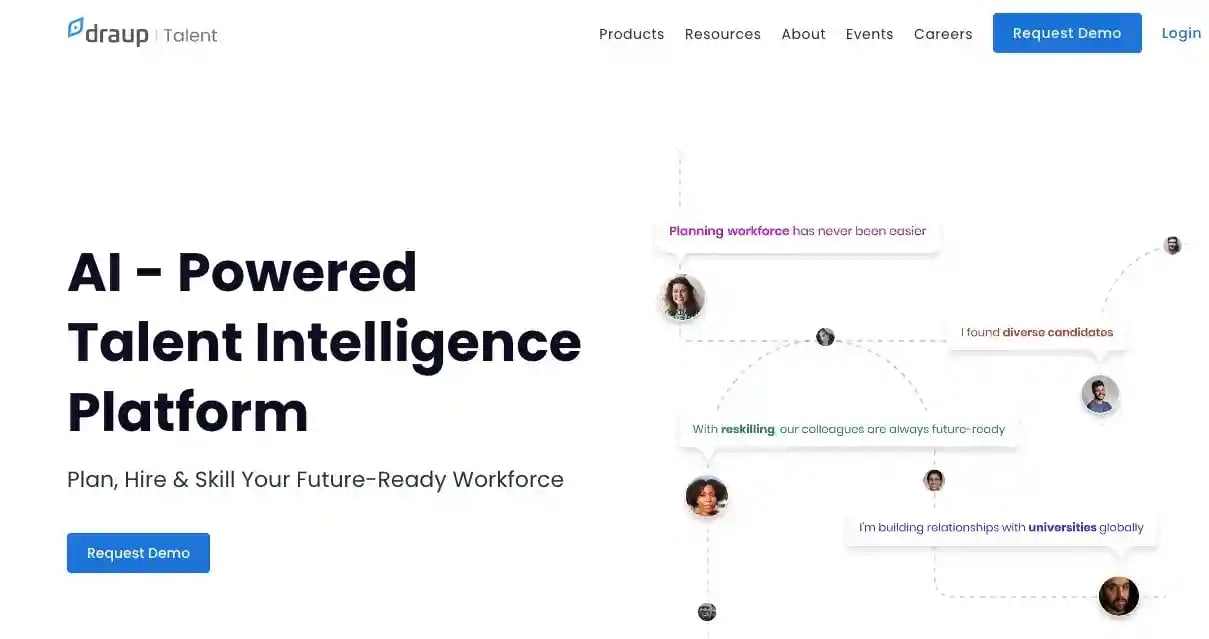
Draup is a AI-powered talent intelligence product that helps recruiters and HR professionals make data-driven decisions in their recruitment processes. It is a versatile platform offering various features, including talent sourcing, market mapping, and competitor analysis.
Best for: Enterprises needing talent market intelligence and competitor workforce insights.
Key features:
- Strategic workforce planning: Tracks talent demand, workforce supply, roles, and skills to support future hiring and workforce decisions.
- Predictive skills architecture: Maps roles and skills to help organizations identify future capability requirements.
- Work redesign: Analyzes how roles and tasks may change as AI and automation affect workforce structures.
- Peer and competitive intelligence: Benchmarks workforce composition, skills, and hiring activity against competitors.
- Location and labor-market intelligence: Evaluates talent availability, compensation, market conditions, costs, and location-related risks.
Pros:
- Combines internal workforce planning with extensive external labor-market intelligence.
- Provides continuously updated data across roles, skills, companies, and locations.
- Supports workforce planning, reskilling, recruitment, and work redesign from one intelligence platform.
Limitations:
- Its extensive datasets and analytical capabilities may require specialist users or workforce-planning expertise.
- Pricing is not publicly available.
G2 Rating: 4.8/5 (11 reviews)
Pricing: Contact Draup to find out about pricing details.
7. TalentNeuron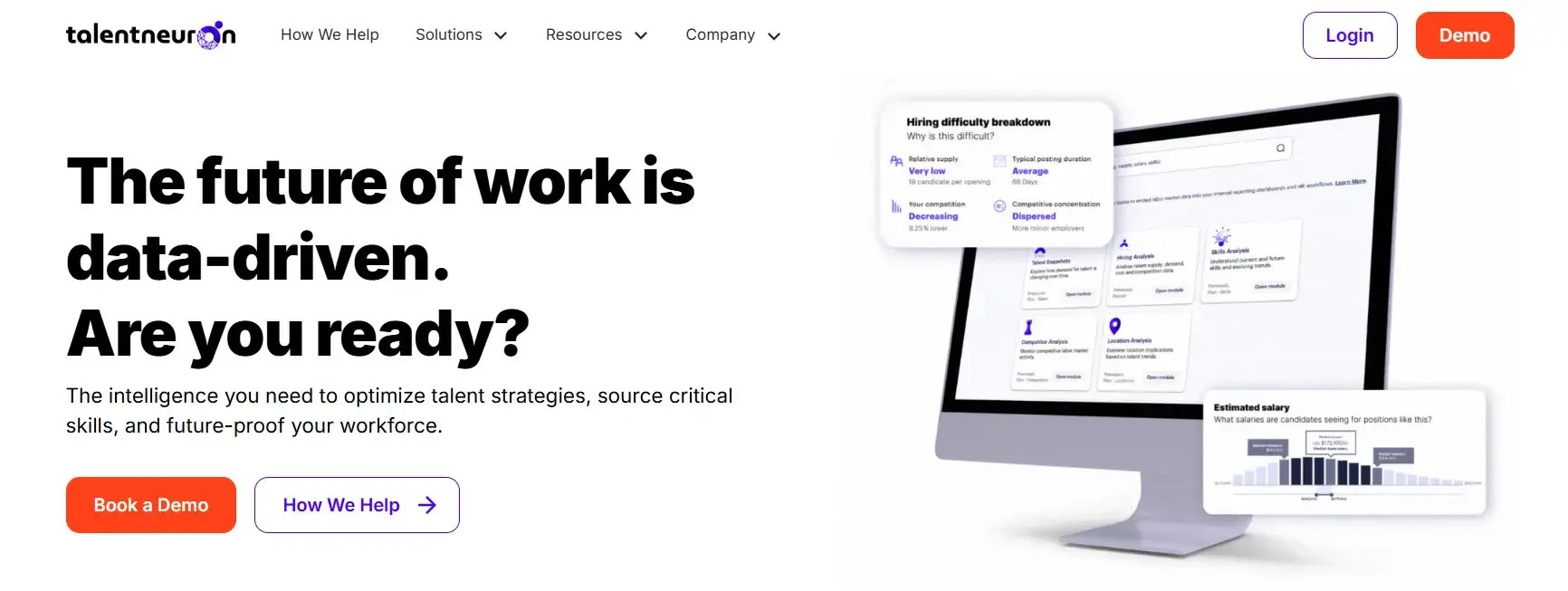
TalentNeuron is a talent intelligence platform that provides real-time labor-market and workforce insights. It helps organizations make data-backed decisions about strategic workforce planning, location analysis, skills forecasting, and talent supply and demand.
Best for: Enterprises focused on labor market analysis and strategic workforce planning.
Key features:
- Strategic workforce planning: Helps organizations compare current workforce capacity with future business requirements.
- Talent supply-and-demand intelligence: Analyzes external talent availability and hiring demand across roles, skills, and locations.
- Location intelligence: Evaluates markets based on talent supply, cost, competition, and workforce conditions.
- Competitor workforce insights: Provides intelligence about competitors’ talent, skills, locations, and workforce movements.
- Scenario modelling: Supports alternative workforce plans based on business growth, transformation, and changing talent requirements.
Pros:
- Provides detailed external workforce and labor-market intelligence.
- Supports location strategy, workforce planning, and talent-supply forecasting.
- Helps organizations connect business plans with data about available talent and skills.
Limitations:
- It is more focused on strategic workforce analysis than day-to-day candidate sourcing.
- Pricing is not publicly disclosed.
G2 Rating: NA
Pricing: Contact TalentNeuron to find out about pricing details.
8. Censia
Censia uses AI and data intelligence to help organizations make more informed talent decisions. It enriches employee and candidate profiles, improves skills visibility, and supports hiring, internal mobility, and workforce planning.
Best for: Enterprises enriching employee and job data to improve skills visibility and internal mobility.
Key features:
- Employee profile enrichment: Adds validated and inferred skills, certifications, education, languages, and work-history data to employee profiles.
- Job profile enrichment: Updates job profiles with current, contextualized skills aligned with the organization’s workforce architecture.
- Skills visibility: Provides a real-time view of workforce capabilities, skills strengths, and capability gaps.
- Internal mobility intelligence: Identifies hidden internal talent and connects employees with suitable growth and career opportunities.
- Enrichment analytics: Visualizes skills distribution, workforce gaps, and organizational strengths through dashboards and reporting.
Pros:
- Creates a unified skills-data layer across existing HR systems.
- Strengthens workforce planning and internal mobility with enriched employee and job data.
- Integrates directly with enterprise HR platforms such as Workday.
Limitations:
- It is primarily positioned as an intelligence layer for enterprise HR ecosystems rather than a standalone recruiting suite.
- Pricing is not publicly disclosed.
G2 Rating: 4.5/5 (11 reviews)
Pricing: Contact Censia to find out the pricing details.
9. Retrain.ai
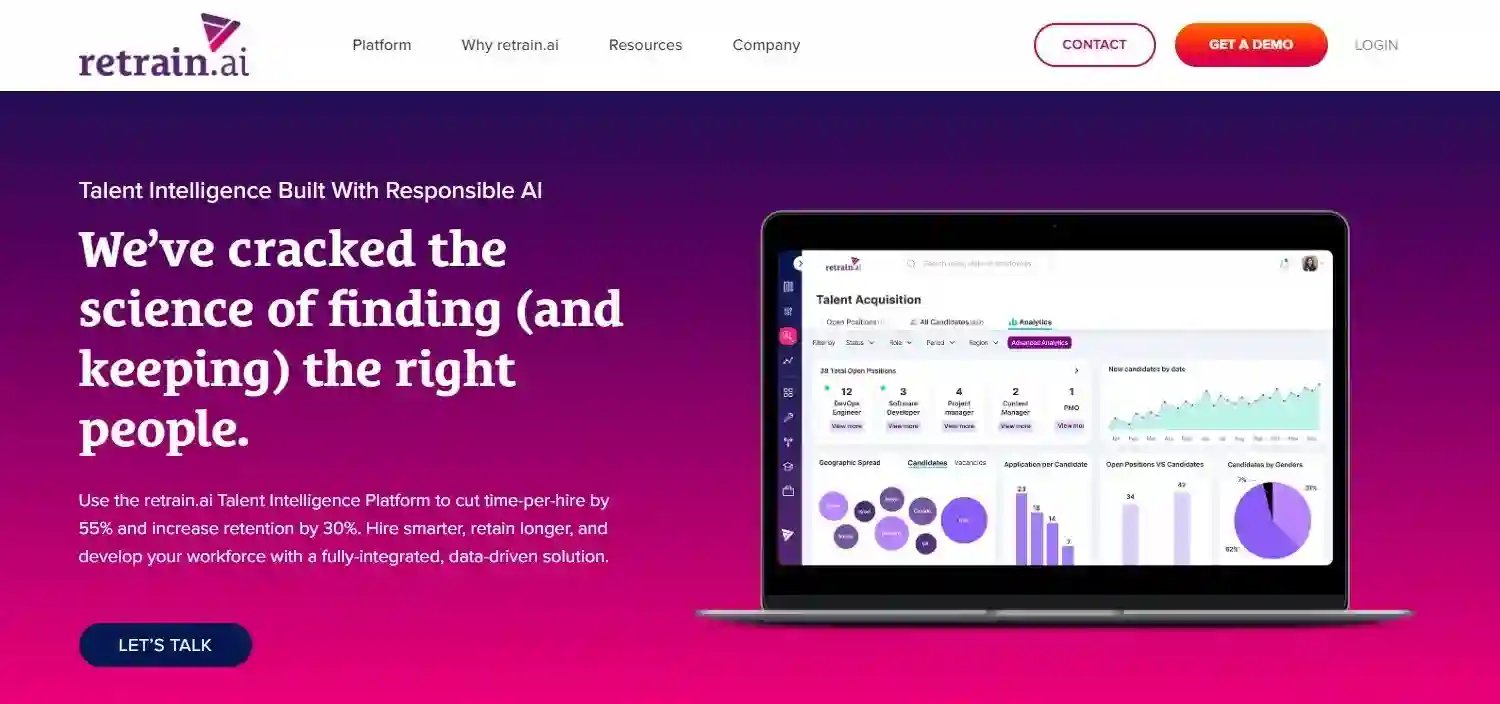
Retrain.ai uses AI to help organizations automate talent matching, skills analysis, and workforce planning. It supports recruiters in sourcing and identifying suitable candidates while also helping businesses understand skills gaps and connect people with relevant roles and development opportunities.
Best for: Organizations using skills intelligence for workforce planning, talent matching, and reskilling.
Key features:
- Skills intelligence: Identifies and organizes workforce skills to create a clearer view of organizational capabilities.
- Skills gap analysis: Compares existing workforce skills with current and future business requirements.
- Talent matching: Matches people with jobs and development opportunities using skills-based data.
- Career and reskilling recommendations: Helps employees identify suitable career paths and relevant learning opportunities.
- Workforce planning: Uses skills and labor-market information to support hiring, mobility, and workforce-development decisions.
Pros:
- Supports skills-based hiring, employee development, and workforce planning.
- Helps organizations connect talent decisions with changing skill requirements.
- Can support both internal talent mobility and external recruitment.
Limitations:
- The value of its recommendations may depend on the quality and completeness of workforce data.
- Pricing is not publicly disclosed.
G2 Rating: NA
Pricing: Contact Retrain.ai to find out about pricing details.
10. Phenom
Phenom is an intelligent talent experience platform that helps organizations attract, engage, develop, and retain talent. It uses AI-powered tools to personalize candidate and employee experiences, support internal mobility, and improve talent decisions.
Best for: Large organizations improving talent experience and candidate engagement.
Key features:
- Talent intelligence: Uses AI and talent data to support candidate, employee, recruiter, and workforce decisions.
- Personalized job recommendations: Matches candidates with suitable roles based on their profiles, skills, and behavior.
- Skills intelligence: Helps organizations understand employee skills and connect people with relevant development opportunities.
- Internal mobility: Recommends jobs, learning, and career paths to employees based on their capabilities and aspirations.
- Talent analytics: Provides insights across recruitment, employee development, talent engagement, and workforce activity.
Pros:
- Supports both external candidate experiences and internal employee development.
- Connects talent intelligence with recruiting, internal mobility, and career development.
- Offers a broad platform for large organizations managing multiple talent experiences.
Limitations:
- Its extensive product suite may require significant implementation and configuration.
- Pricing is available only through a custom quote.
G2 Rating: 4.3/5 (430 reviews)
Pricing: Based on a subscription model
11. Talent.ai
Talent.ai uses AI to help organizations make data-driven recruitment decisions. It supports talent sourcing, screening, and selection through advanced algorithms, predictive analytics, and external talent insights.
Best for: Technology and biotech companies seeking external talent mapping, location intelligence, and compensation insights.
Key features:
- Global talent intelligence: Provides external talent data to help technology companies identify relevant people and skills across markets.
- Talent-pool tracking: Continuously tracks global talent and categorizes professionals by skill set using a proprietary methodology.
- Location intelligence: Provides people data for market-entry and site-selection decisions across countries and regions.
- Compensation intelligence: Delivers salary and compensation insights based on a company’s competitors and talent ecosystem.
- Talent pipelining: Builds and manages targeted talent pools for specific roles, skills, locations, or expansion plans.
Pros:
- Provides tailored external talent intelligence for technology and biotech companies.
- Supports location planning, compensation analysis, and targeted talent-pool development.
- Continuously updates talent intelligence according to client-defined requirements.
Limitations:
- Its positioning is focused mainly on fast-growth technology companies rather than all industries.
- The offering appears to combine a platform with advisory and managed services, which may not suit buyers seeking a fully self-service product.
G2 Rating: NA
Pricing: Contact Talent.ai to find out about the pricing details.
12. SeekOut
SeekOut is an AI-powered talent intelligence platform that helps organizations identify and recruit qualified candidates. It combines advanced search, talent-pool insights, and diversity analytics to support more targeted sourcing and hiring decisions.
Best for: Mid-sized and enterprise talent-acquisition teams sourcing and screening external candidates.
Key features:
- Agentic talent sourcing: Uses AI agents to search for and identify candidates based on defined hiring requirements.
- External talent search: Searches a large database of professional profiles to find candidates across roles and industries.
- Applicant screening: Evaluates inbound applicants and identifies those who best match job requirements.
- Talent rediscovery: Searches existing ATS records to uncover qualified candidates already known to the organization.
- Personalized engagement: Supports targeted candidate outreach using profile and talent intelligence.
Pros:
- Combines external sourcing, applicant screening, and ATS talent rediscovery.
- Helps recruiters search across both new and existing candidate pools.
- Uses AI to automate time-consuming sourcing and screening activities.
Limitations:
- Its strongest capabilities are concentrated on external recruiting rather than internal workforce planning.
- Pricing is not publicly disclosed.
G2 Rating: 4.5/5 (772 reviews)
Pricing: Based on a subscription model
13. Skima AI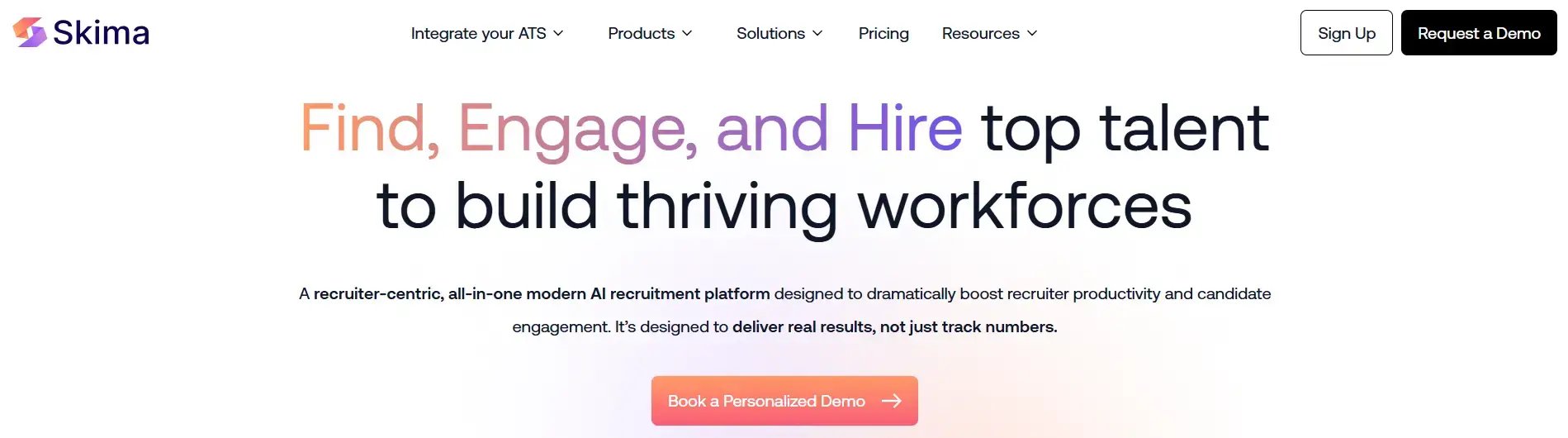
Skima is an AI-powered recruitment and talent intelligence platform that helps organizations source, match, and manage candidates more efficiently. It supports hiring teams by using AI-driven search and analytics to identify relevant talent and streamline recruitment workflows.
Best for: Recruiting teams using AI-powered candidate search, matching, and talent rediscovery.
Key features:
- AI candidate search: Searches existing candidate databases using skills, experience, and other relevant hiring criteria.
- Intelligent résumé parsing: Extracts skills, experience, projects, education, and career gaps from multiple résumé formats.
- Explainable matching scores: Ranks candidates and provides evidence showing why each person received a particular score.
- ATS talent rediscovery: Identifies qualified candidates already stored in an organization’s applicant tracking system.
- Adaptive recruitment intelligence: Learns from hiring decisions and company preferences to improve future candidate recommendations.
Pros:
- Converts unstructured ATS data into searchable, structured talent intelligence.
- Provides auditable candidate scores supported by profile evidence.
- Integrates with a wide range of ATS and HR systems without replacing existing workflows.
Limitations:
- Its intelligence capabilities are primarily focused on candidate sourcing and screening.
- It offers less emphasis on internal mobility and strategic workforce planning than broader enterprise platforms.
G2 Rating: 4.5/5 stars (28reviews)
Pricing: Starts at $79/month
14. Loxo
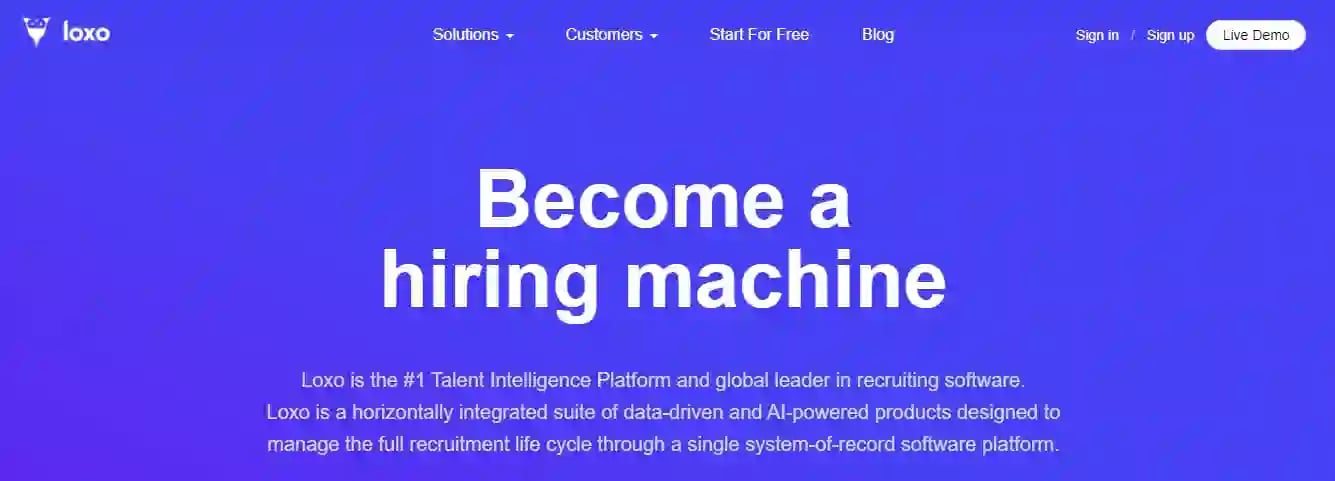
Loxo is a talent intelligence tool aimed to make hiring easier for businesses of all sizes. With its innovative AI-based algorithms and user-friendly interface, this platform provides many strong capabilities to quickly assist recruiters in finding and hiring top talent.
Best for: Staffing firms and recruiting teams seeking AI-powered sourcing and recruitment intelligence.
Key features:
- Proprietary talent graph: Provides access to a talent graph containing hundreds of millions of professional profiles and company records.
- AI-powered talent sourcing: Uses recruitment-specific AI models to identify relevant candidates across internal and external data.
- Recruitment intelligence: Learns from searches, conversations, notes, and placements to improve future recommendations.
- Talent relationship intelligence: Combines candidate data, communication history, and recruiting activity in a unified system.
- AI recruiting agents: Automates parts of sourcing, outreach, data enrichment, and recruitment workflows.
Pros:
- Combines sourcing, talent data, ATS, CRM, outreach, and AI in one platform.
- Uses a proprietary talent graph and recruitment-specific AI rather than relying only on third-party data.
- Becomes more personalized as teams complete searches, conversations, and placements.
Limitations:
- Its talent intelligence is primarily designed for recruiters and staffing firms rather than internal workforce planning.
- Organizations replacing several existing recruiting tools may need onboarding and workflow changes.
G2 Rating: 4.6/5 (168 reviews)
Pricing: Starts at $299/month
15. Oorwin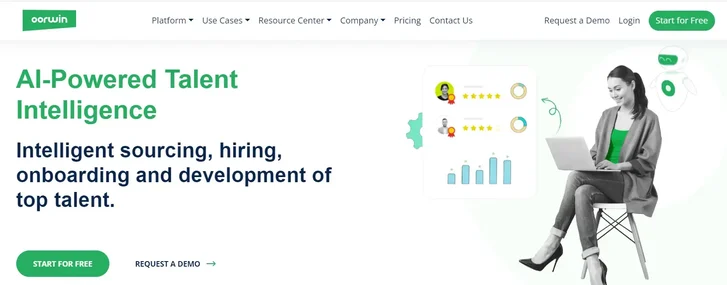
Oorwin is a cloud-based recruitment platform that helps staffing firms and talent acquisition teams manage sourcing, candidate matching, and hiring workflows. It combines AI-powered recruitment tools, automation, and analytics to support more efficient talent management.
Best for: Staffing firms and recruiting teams needing AI-assisted sourcing, candidate matching, and recruitment automation.
Key features:
- AI candidate matching: Identifies relevant candidates by comparing profiles, skills, and experience with job requirements.
- Talent-pool intelligence: Organizes candidate records into searchable talent pools for future hiring requirements.
- Candidate rediscovery: Helps recruiters identify relevant candidates already stored in the recruitment database.
- Recruitment analytics: Provides visibility into sourcing, pipelines, recruiter activity, and hiring performance.
- AI-assisted sourcing: Supports candidate discovery and recruitment automation across integrated hiring workflows.
Pros:
- Combines AI-supported candidate intelligence with recruitment workflow management.
- Helps teams search, organize, and reuse existing candidate data.
- Supports staffing firms and recruitment teams through integrated analytics and automation.
Limitations:
- Its talent intelligence capabilities are more recruitment-focused than workforce-planning focused.
- Some advanced functionality may depend on the selected package and integrations.
G2 Rating: 4.6/5 (266 reviews)
Pricing: Varies based on the size of the organization and its recruitment needs
| Discover the top 10 talent intelligence consulting firms of 2026 and learn how they help organizations streamline workforce strategy with data-driven precision. |
How to Choose the Right Talent Intelligence Platform
- Define your primary use case: Identify whether your focus is skills-based hiring, workforce planning, talent market insights, or a combination of these.
- Evaluate skills intelligence capabilities: Ensure the platform can accurately identify, map, and standardize skills across candidates, employees, and roles.
- Assess talent market insights: Look for reliable data on talent availability, in-demand skills, geographic trends, and competitive hiring activity.
- Review workforce planning and predictive analytics: Check whether the platform can forecast skills demand, workforce gaps, and hiring trends to support proactive planning.
- Check data integration and usability: Confirm seamless integration with your ATS, HRIS, and other HR systems, and ensure insights are easy for teams to act on.
- Align with organizational scale and maturity: Choose a platform that fits your company size, hiring volume, and current level of skills and data maturity.
Conclusion
As hiring becomes more skills-driven and workforce needs continue to evolve, talent intelligence platforms play a crucial role in helping organizations make informed, future-ready talent decisions. By combining skills data, workforce insights, and labor market intelligence, these platforms enable teams to improve hiring outcomes and build resilient, skills-first workforces.
Understanding the strengths and focus areas of different talent intelligence software is essential to choosing the right solution. This blog helps talent acquisition and HR leaders compare options, evaluate capabilities, and move forward with greater confidence in their talent strategy.
FAQs
Who uses the Talent Intelligence Software?
Talent intelligence solutions are used by HR teams, recruiters, talent acquisition professionals, and workforce strategists to make data-driven hiring and workforce planning decisions. Companies across tech, finance, healthcare, and manufacturing leverage these platforms to assess skills, identify gaps, and develop employees effectively.
What is the Talent Intelligence Model?
A talent intelligence model is a framework that collects, analyzes, and applies workforce data to enhance decision-making in recruitment, skills management, and employee development. It integrates AI, skills analytics, and predictive workforce insights to drive a skills-first approach to talent management.
What is the difference between Talent Intelligence and People Analytics?
While people analytics focuses on employee engagement, performance, and HR metrics, talent intelligence is skills-driven helping companies assess talent, map skills, and optimize workforce planning. Talent intelligence predicts future skills needs and improves hiring and internal mobility, making it a more strategic workforce tool.