

Skills matrix software helps organizations map, assess, and track employee skills, competencies, certifications, and proficiency levels in a centralized system. It provides visibility into workforce capabilities, making it easier to identify strengths and address skill gaps.
Unlike spreadsheets, modern platforms automate skills tracking, competency management, and reporting. Many also integrate with HR systems and learning management systems (LMS) to provide real-time workforce insights.
The best solutions offer advanced features such as skill gap analysis, workforce analytics, certification tracking, succession planning, and internal mobility support to help organizations make informed talent decisions.
The image shared below is an example of a conventional skills matrix that segregates employees on the basis of their knowledge and know-how of a particular skill.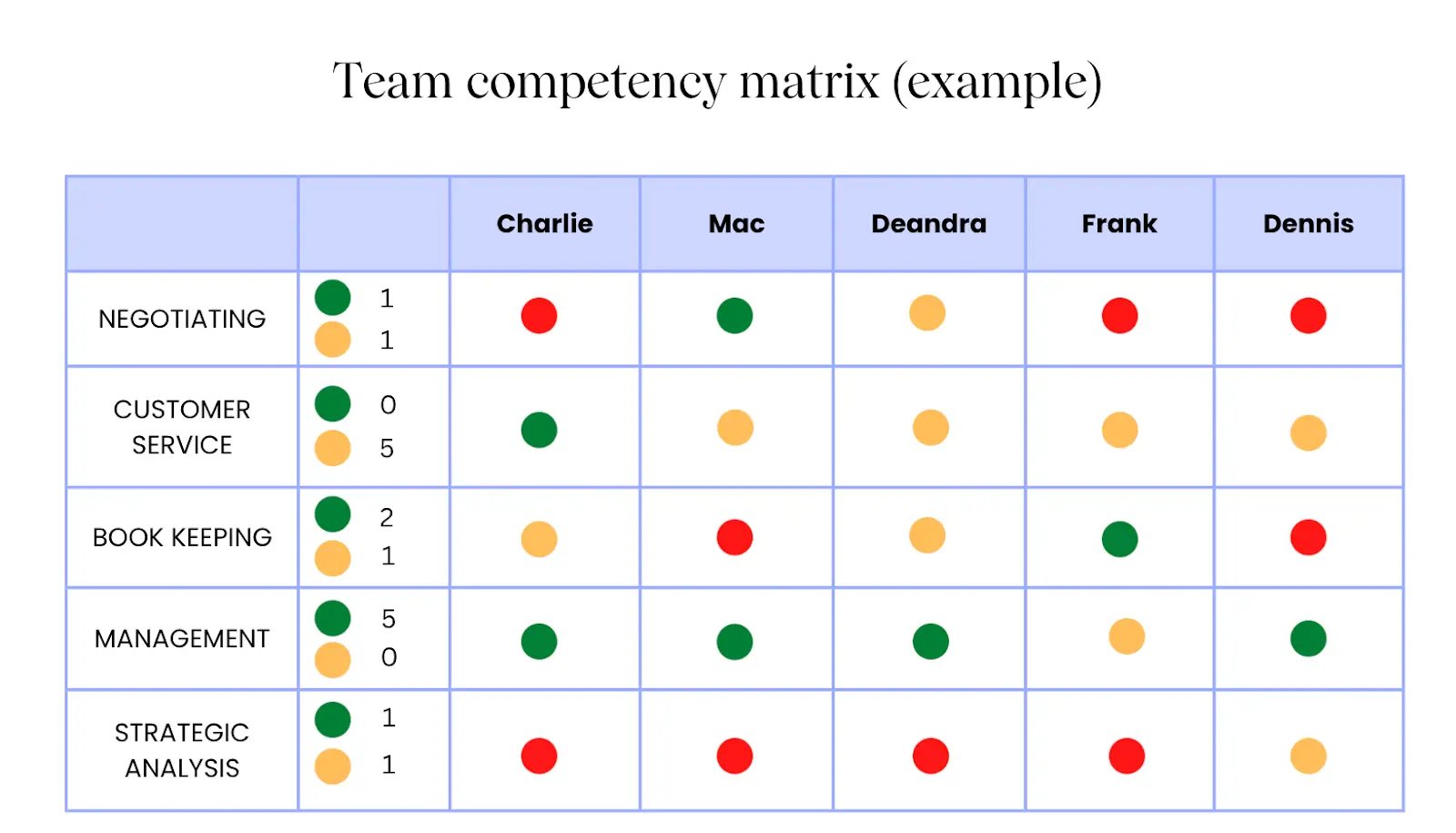
In this guide, we'll explore the top 11 skills matrix software solutions for 2026, comparing their key features, pricing, and ideal use cases to help you choose the right platform.
|
Table of contents |
Top 11 Skills Matrix Software for 2026
1. iMocha
iMocha is a Skills Intelligence platform that replaces traditional skills matrices with AI-powered capabilities. It enables organizations to assess, map, and optimize workforce skills through real-time inventories, gap analysis, benchmarking, and AI-driven career pathing. It helps predict future workforce needs and align talent with business goals using data-backed insights.
Key Features:
- AI-based skill assessments
- Customizable skills taxonomy and ontology
- Automated skills validation & gap analysis
- AI-driven internal mobility recommendations
- Seamless LMS & HRMS integrations
Best for: Enterprise organizations seeking AI-powered skills intelligence, workforce planning, skill gap analysis, and internal mobility initiatives.
G2 Rating: 4.4/5 (276 reviews)
Pricing: Visit iMocha's custom pricing page for more details.
2. Skills Base
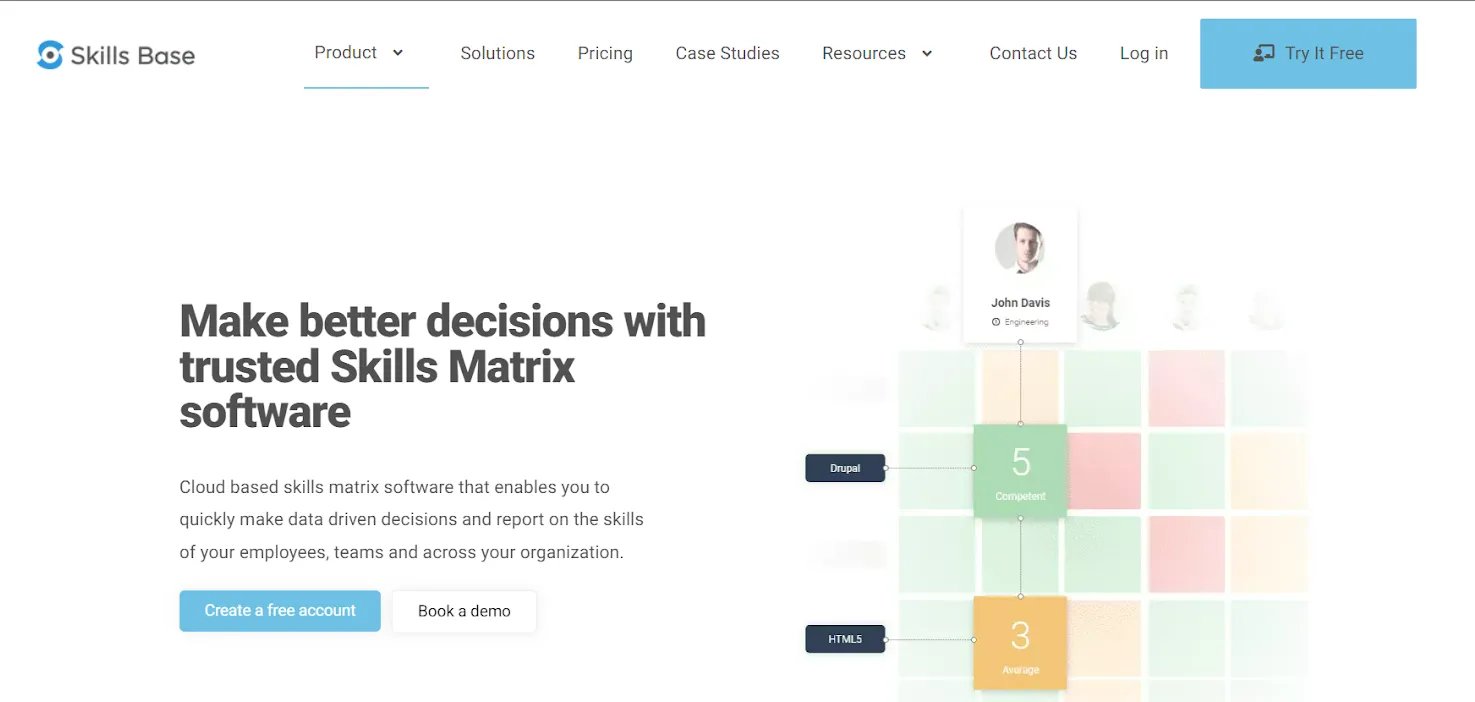 Skills Base is a cloud-based skills matrix tool that allows you to make data-driven decisions and report on the skills of your employees and teams. It is designed for businesses and teams of all sizes and helps teams and organizations understand, measure, assess, visualize and act on skills data in a meaningful and intuitive way.
Key Features:
- It helps you automatically visualize your skill competency data in seconds
- Allows you to do scenario planning around the skill competencies of your teams
- Helps career planning based on the goals of individuals and organization
- Easy API Integration
- GDPR+ Compliant
Best for: Small and mid-sized businesses looking for an affordable, user-friendly skills matrix platform with competency tracking and workforce planning capabilities.
G2 Rating: 4.6/5 (18 reviews)
Pricing: Free for up to 25 users
3. TalentGuard
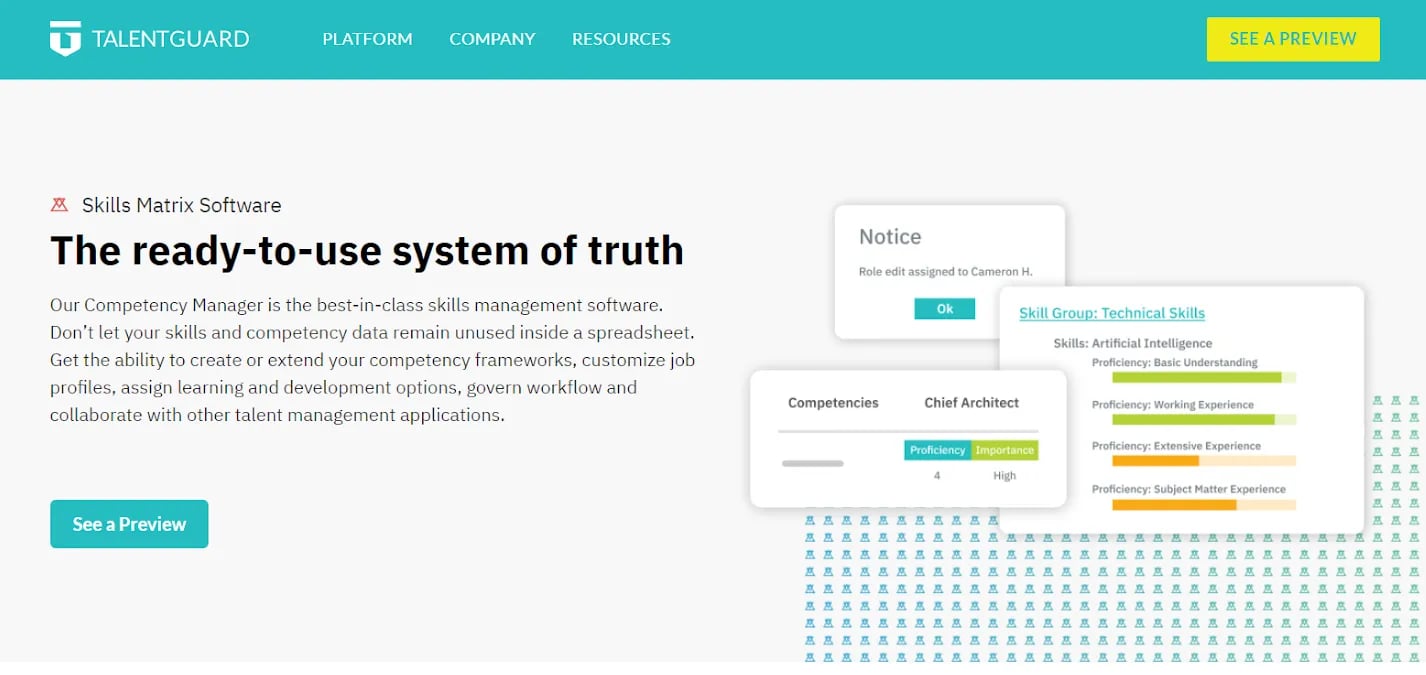 TalentGuard is a global provider of SaaS-based talent competency management solutions. It offers a cloud-based software suite that helps you engage and retain employees. It also allows you to create, edit and compare multiple competencies such as skills, experience, qualifications, and other preferences required for specific job functions.
Key Features:
- Automates performance management
- 360-degree feedback support
- Career pathing and succession planning
- Individual development planning
- Certification tracking
Best for: Organizations focused on talent development, career pathing, succession planning, and employee growth.
G2 Rating: 4.7/5 (3 reviews)
Pricing: Not disclosed publicly
4. Team Guru
 TeamGuru is a strategic planning and performance management platform that helps organizations align teams with business objectives. It enables users to manage projects, track key metrics, and monitor progress in a centralized environment. By providing visibility into workforce capabilities and performance, TeamGuru helps organizations improve alignment and support continuous improvement initiatives.
Key Features:
- Deploys strategic objectives using a Hoshin Kanri X-matrix
- Manages all critical projects and actions in one place
- Set up crisp dashboards to track your key performance indicators
- Resolves problems quickly (5-Why, Pareto, Corrective Actions).
- Eliminates PowerPoint reports, re-use live charts & actions
Best for: Organizations using Lean, Hoshin Kanri, or continuous improvement methodologies to align workforce capabilities with strategic objectives.
G2 Rating: 4.0/5 (1 review)
Pricing: Not disclosed publicly
5. Think Eleven: SkillStation
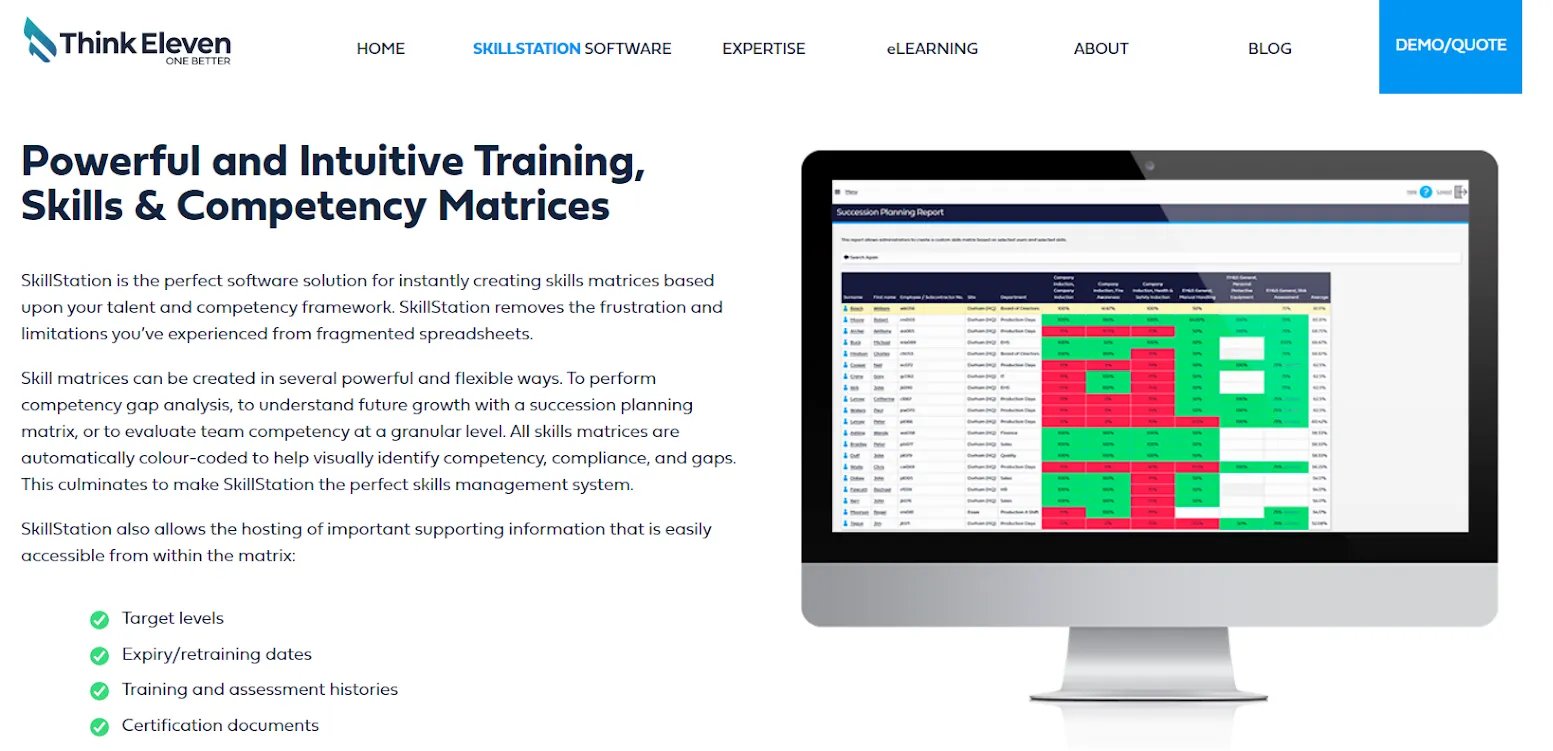 Think Eleven’s SkillStation is competency matrix software that instantly creates skills matrices based on your talent and competency framework, removing the frustration and limitations of spreadsheets and paperwork. It enables you to host crucial supporting information, which can be easily accessed within the same matrix.
Features:
- Creates skills and training matrices of any size
- Chooses any combination of people, skills, job roles, or functions
- Provides customizable or generic skill targets for individuals/job roles
- Offers instant access to historical training and assessment data, certification, and evidence
Best for: Compliance-driven organizations that need competency tracking, certification management, and training record visibility.
G2 Rating: NA
Pricing: Not disclosed publicly
6. Teammeter
 Teammeter’s software solutions help organizations adapt quickly to ongoing market demands. It identifies how many team members must be trained to deliver success and monitors their critical skills and capabilities to ensure that the team has sufficient knowledge. It offers you spider diagrams that help you assess the learning potential of your team and how much progress they have made.
Key Features:
- Defines skill requirements and identifies the gaps
- Visualizes progress
- Improves collaboration
- Supports the development of skills in the entire organization
- Integration with JIRA for task management
Best for: Agile and project-based teams looking to visualize workforce skills, identify capability gaps, and improve resource allocation.
G2 Rating: NA
Pricing: Not disclosed publicly
7. muchskills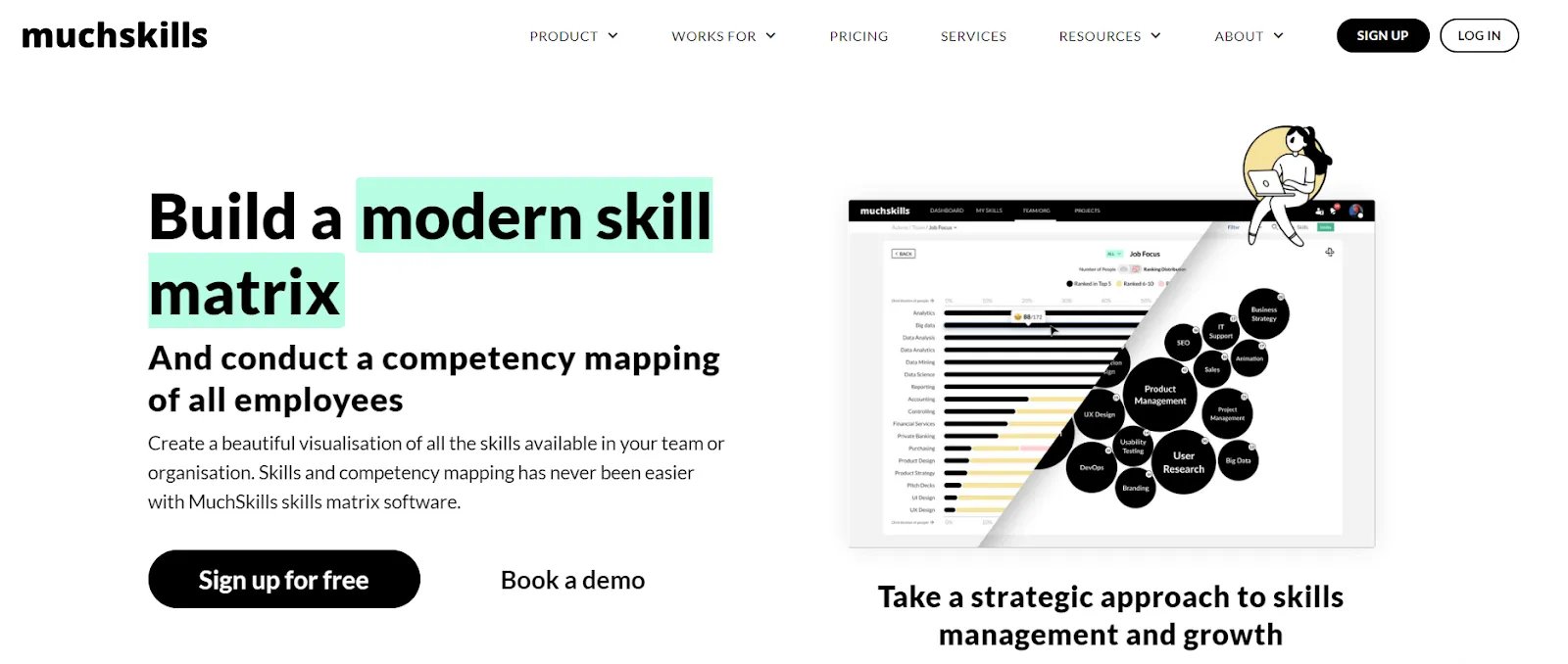 muchskills is a skills and strengths visualization tool that enables individuals and teams to improve productivity, engagement, and job satisfaction by evaluating skills and matching the right person for the right project. It visualizes the skills available in your team or organization and presents them using engaging modern skill matrices.
Key Features:
- Skill & competency matrix
- Certification tracking
- Organizational chart
- Skill gap analysis
- Team builder
Best for: Teams seeking intuitive skills visualization, collaboration, employee engagement, and competency mapping.
G2 Rating: 4.5/5 (3 reviews)
Pricing: For teams of up to 100 members: €5 per month
| Looking for the best training matrix software in 2026? Here are 12 top tools to help you track employee skills, ensure compliance, and enhance workforce development. |
8. Skill Metrics
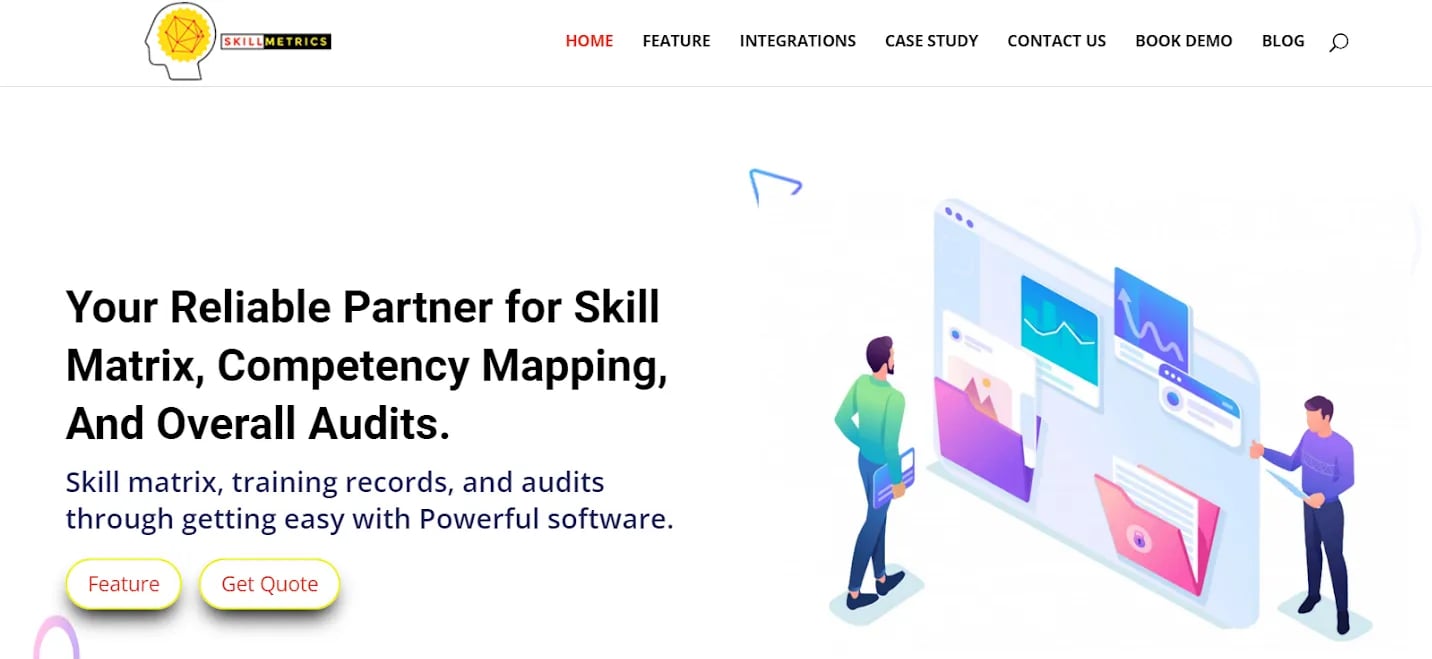 Skill Metrics helps you manage your organization's overall skills, competency matrix, and training records using advanced software that brings all this information in one place. It provides centralized support and reporting capabilities to eliminate spreadsheets and paper-based documents and forms and also enables you to plan and schedule.
Key Features:
- Unlimited records
- Easy to manage
- Powerful and intuitive dashboards
- Department performance overview
- Timely reminders
Best for: Organizations that need centralized training records, competency management, compliance tracking, and audit readiness.
G2 Rating: NA
Pricing: Not disclosed publicly
9. AG5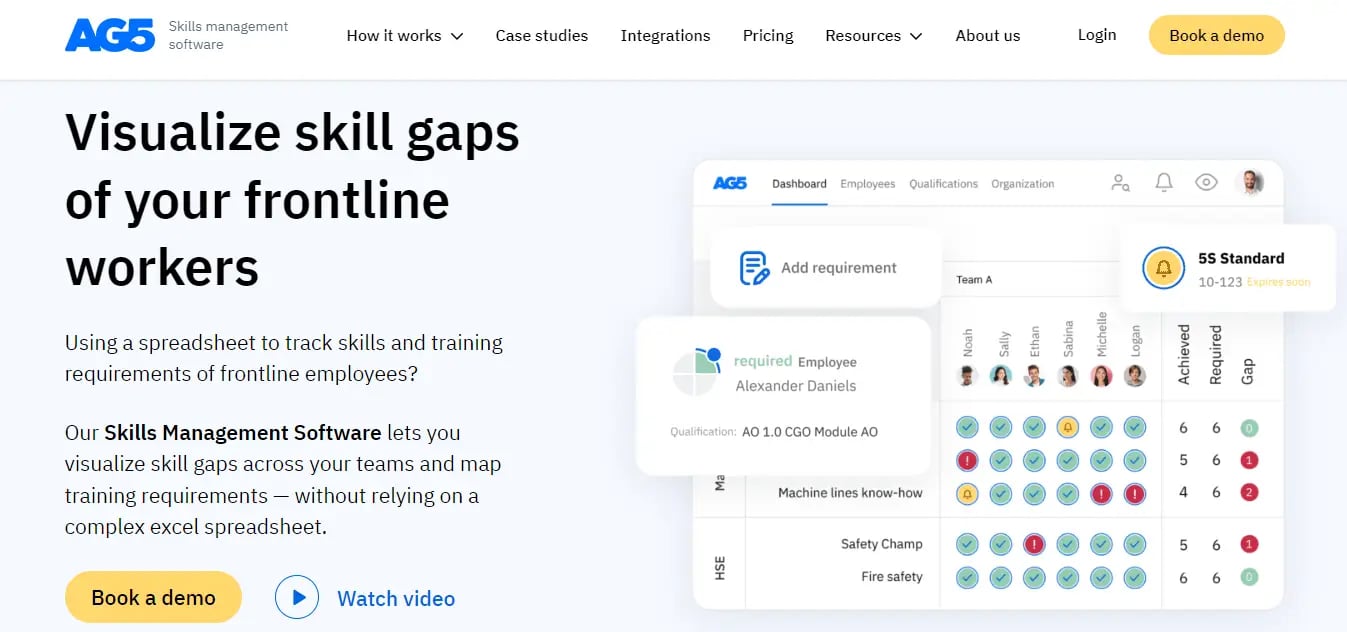
AG5 is a cloud-based skills management software with skill matrix feature designed to help businesses track workforce skills and competency levels in real time. It simplifies compliance tracking and skill-based workforce planning with intuitive visual tools.
Key Features:
- Pre-built skill matrix templates
- Compliance tracking and reporting
- API integrations with HR software
- Role-based skill mapping
Best for: Manufacturing, operations, and compliance-focused organizations requiring real-time certification tracking and workforce qualification management
G2 Rating: 4.6/5 (37 reviews)
Pricing:
Core: €599 per month
Growth: €1199 per month
Accelerate: €2300 per month
10. Poka
Poka is a skills matrix management platform designed for manufacturing teams. It helps organizations identify and fill skill gaps while ensuring operational efficiency through digital training and collaboration.
Key Features:- Real-time skills tracking and assessment
- Digital training integration
- Mobile-friendly workforce collaboration tools
- Automated compliance reporting
Best for: Manufacturing companies looking to improve frontline workforce development, operational efficiency, and skills-based training.
G2 Rating: 4.7/5 (174 reviews)
Pricing: Get in touch with Poka
11. agyleos
agyleos is a skills matrix software built for enterprises looking to optimize workforce planning. It offers powerful analytics and competency tracking to improve employee development strategies.
Key Features:
- Dynamic competency matrix
- AI-powered workforce analytics
- Employee upskilling recommendations
- Integration with LMS and HRMS systems
Best for: Large enterprises seeking workforce analytics, competency management, strategic workforce planning, and employee upskilling recommendations.
G2 Rating: NA
Pricing:
Starter: €5/ user per month
Pro: €8/ user per month
Enterprise: Customized pricing
| Check out the top 12 skills tracking software that help keep your skills matrices up-to-date and drive informed talent decisions. |
How to Choose the Right Skills Matrix Software
When evaluating skills matrix software, consider the following factors:
- Skills management capabilities: The ability to track, assess, and manage employee skills, competencies, certifications, and proficiency levels.
- Skill gap analysis and workforce planning: Features that help identify skill gaps and support strategic workforce development initiatives.
- Reporting and analytics: Dashboards and insights that provide visibility into workforce capabilities and training needs.
- Integrations and scalability: Compatibility with existing HR and learning systems, along with the flexibility to support organizational growth.
- Ease of use and customer satisfaction: An intuitive user experience backed by positive customer reviews and a strong market reputation.
Conclusion
Skills matrix software helps organizations gain visibility into workforce capabilities, identify skill gaps, and support data-driven talent decisions. The right solution depends on your organization's goals, workforce size, and skills management requirements.
The tools featured in this guide offer a range of capabilities to support skills-based workforce management. For organizations looking to build a skills-first workforce, iMocha provides AI-powered skills intelligence, workforce analytics, and strategic workforce planning capabilities.
FAQs
What is skills matrix software?
A skills matrix tool visually maps employee skills and competencies, helping organizations track, assess, and develop workforce capabilities efficiently.
Why use skills matrix software?
It enables skill gap analysis, workforce planning, and employee development. Companies can optimize hiring, training, and project assignments based on real-time skills data.
How is a skills matrix different from a training matrix?
A skills matrix focuses on assessing and tracking employee skills and competencies, while a training matrix highlights required training programs and certifications needed for workforce development.
How to create a skills matrix?
Steps to create a skills matrix:
- Identify key skills relevant to roles in your organization.
- Assess employee skill levels through evaluations or assessments.
- Map out skills visually in a matrix format.
- Identify skill gaps and create a training plan.
- Regularly update and refine the matrix based on business needs.