

Skills management software for enterprises helps large organizations identify, track, and develop employee skills at scale. It provides a centralized system to build a structured skills inventory, assess workforce capabilities, and align talent with business goals. With clear visibility into skills data, HR and business leaders can make informed decisions about hiring, reskilling, and internal mobility.
As technology and business needs evolve, enterprises require better tools to manage complex workforce capabilities across teams and locations. Enterprise-grade skills management tool supports skills gap analysis, workforce planning, career pathing, and AI-driven insights. By turning skills data into actionable intelligence, organizations can strengthen talent strategy and remain competitive in a rapidly changing market.
Key Features Enterprises Look for in Skills Management Software
When evaluating skills management system, enterprises prioritize platforms that provide scalability, visibility, and data-driven workforce insights. The most important features include:
- Skill Mapping: Maps employee skills to roles, projects, and business objectives to provide clear visibility into workforce capabilities and alignment.
- Centralized Skills Inventory: A structured system to track employee skills, proficiency levels, and certifications across the organization.
- Workforce Analytics and Reporting: Provides real-time dashboards and data insights to guide enterprise talent strategy and performance planning.
- Integration Capabilities: Seamless integration with HRIS, LMS, ATS, and other enterprise systems.
- Scalability and Compliance Support: Enterprise-grade security, global scalability, and certification tracking for regulated industries.
In this listicle, we explore the top 10 employee skills management software for enterprises to help you evaluate your options and choose the right solution for your organization.
|
Table of contents |
Top 10 Skill Management Software in 2026
1. iMocha
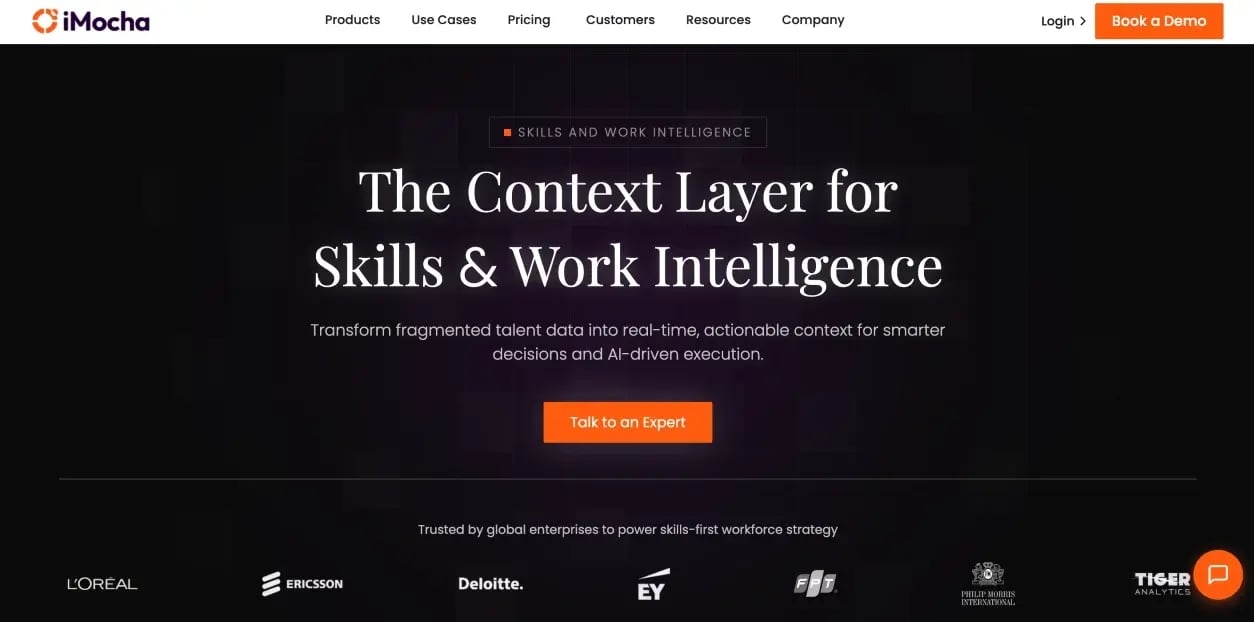
iMocha is an AI-powered skills management software that helps enterprises build a skills-based workforce. It enables organizations to identify, validate, and manage employee skills at scale while aligning talent strategy with business goals. With structured skills frameworks and real-time analytics, iMocha supports data-driven workforce planning, internal mobility, and targeted upskilling and reskilling initiatives.
Key Features:
- AI-Driven Skills Intelligence: Uses validated skills data and AI to provide accurate workforce capability insights.
- AI-Skills Match: Matches employees to roles, projects, and career paths using validated skills data and AI-driven recommendations.
- Skills Taxonomy and Ontology Management: Provides structured and customizable frameworks to standardize skills across the enterprise.
- Skills Gap Analysis: Identifies capability gaps to support strategic hiring and upskilling decisions.
- Internal Mobility Enablement: Promotes internal talent movement by aligning employee skills with open opportunities.
- Personalized Learning Paths: Recommends targeted development plans based on individual skill gaps and career goals.
G2 Rating: 4.4/5 (276 Reviews)
2. Kahuna
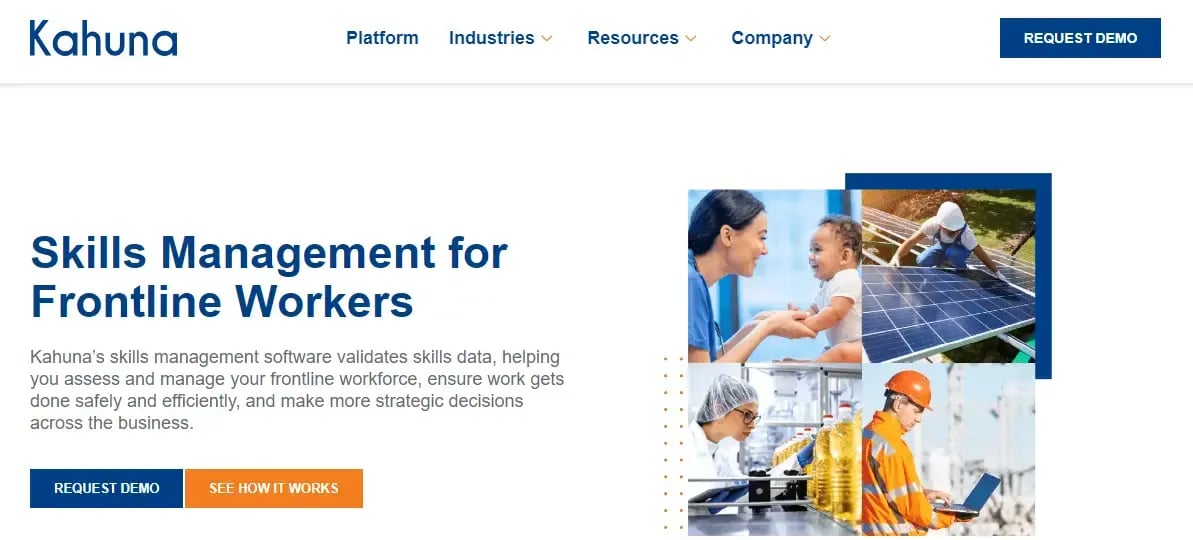 Kahuna is a Modern Skills and Competency Management Software. It takes a broader approach to skills management for enterprises. It's a platform designed to be a one-stop shop for HR, L&D, and operations leaders.
Key Features:
- Unified Skills Management: It provides a holistic view of your workforce's capabilities, offering actionable insights to inform strategic decision-making.
- Seamless Collaboration: It integrates seamlessly with existing HR and L&D systems, enabling smooth data transfer, improved workflows, and enhanced reporting across departments.
- Talent at Your Fingertips: Kahuna's powerful talent finder functionality lets you search based on skills, certifications, experience, and location. This ensures you find the right fit for every role, leading to safe and efficient operations.
- Assignment Workbench for Streamlined Management: Kahuna's Assignment Workbench allows managers to view individual and group skillsets, assign tasks, and handle exemptions, simplifying workforce management.
G2 Rating: 5/5 (30 Reviews)
3. Skillsoft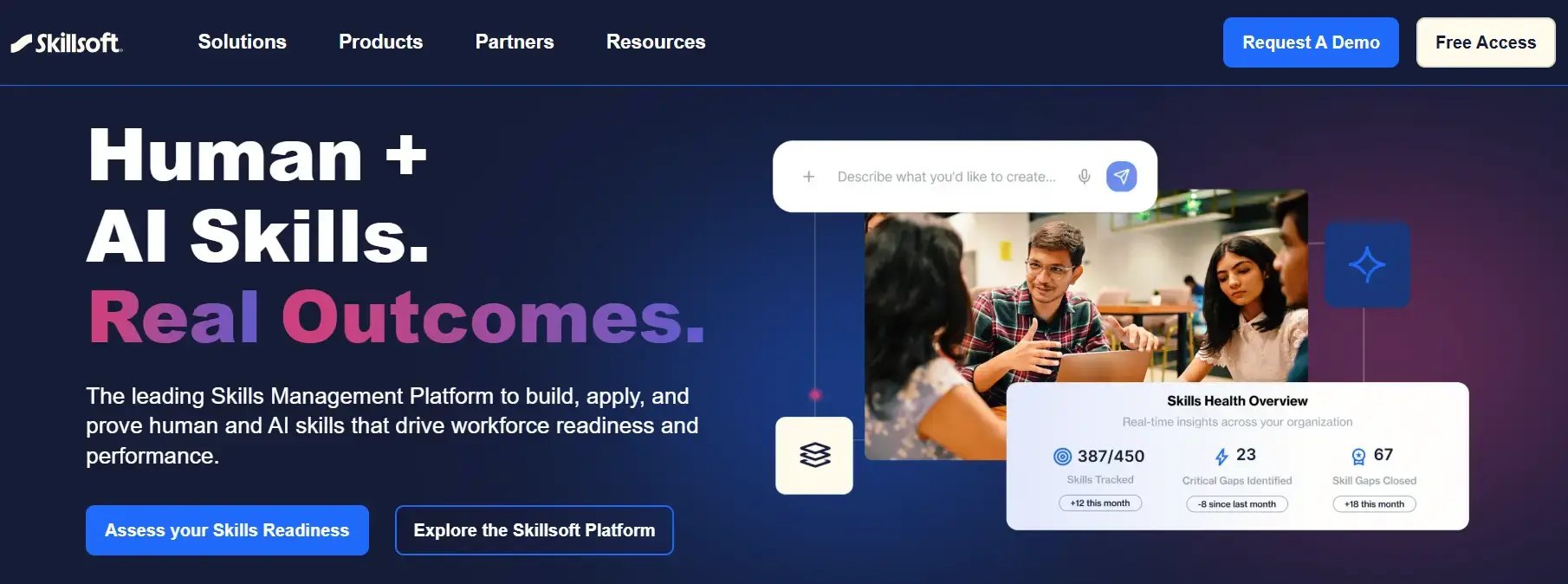
Skillsoft is a corporate learning and talent development platform that helps enterprises build workforce capabilities through structured learning, leadership development, and technology skill training. It combines learning content, skill benchmarking, and workforce insights to support reskilling and long-term talent strategy.
Key Features:
- Extensive Content Library: Offers a large catalog of courses, certifications, and learning paths across technology, leadership, and business skills.
- Skill Benchmarking: Assesses workforce capabilities to identify strengths and development areas.
- Leadership Development Programs: Provides structured programs for emerging and senior leaders.
- Compliance Training: Supports enterprise compliance and regulatory learning requirements.
- Analytics and Reporting: Delivers insights into learning progress, engagement, and skill development trends.
G2 Rating: 4.1/5 (103 Reviews)
4. Neobrain
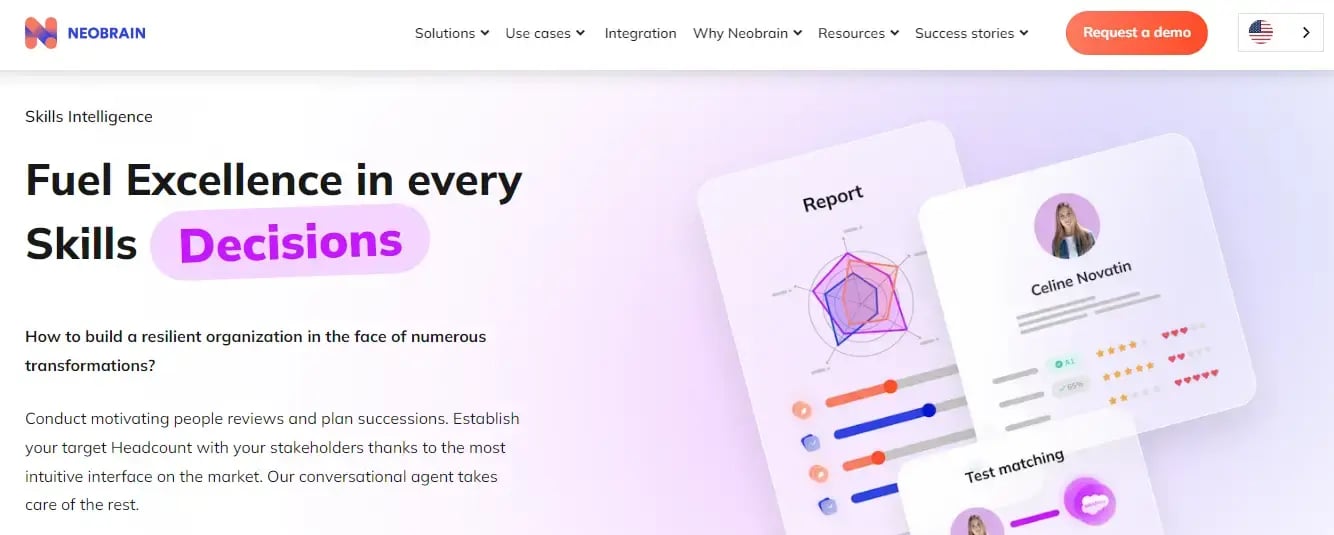 Neobrain takes a data-driven approach to skills management, offering a robust platform for building and maintaining a comprehensive skills library for your organization.
Key Features:
- Centralized Skills Repository: Create, audit, and upgrade your skills library easily, ensuring everyone can access the latest information.
- Dynamic and Multilingual: The platform offers dynamic updating, allowing you to adapt your skills library as needed. Additionally, it caters to a global workforce with multilingual support.
- Accurate Skills Mapping: It helps you maintain a continuously updated skills map, clearly showing your workforce's capabilities.
- Skills Assessment Made Easy: Evaluate new candidates and existing employees using its built-in assessment tools. This helps you identify strengths, weaknesses, and potential skill gaps, allowing for targeted development initiatives.
G2 Rating: 4.7/5 (64 Reviews)
| Check out how an internal talent marketplace uses enterprise skills data to enable smarter role matching and internal mobility. |
5. 365Talents
 365Talents takes a multi-faceted approach to skills management, offering tools designed to empower your employees and your organization. Features like Skills Drive for large-scale skills mapping make it a very functional skills management software for enterprises.
Key Features:
- Skills Mapping with SkillsDrive: SkillsDrive, a core component of 365Talents, helps you map your employees' skills to specific roles and projects. This creates a clear picture of your workforce's capabilities and allows for strategic talent allocation.
- Workforce Intelligence: By understanding your workforce's skillsets and potential gaps, you can make data-driven choices about development and upskilling initiatives.
- Internal Talent Marketplace: Talent Marketplace fosters internal mobility by creating a platform for employees to showcase their skills and explore new organizational opportunities.
- Dynamic Skills Framework: Their dynamic skills framework adapts to changing needs, ensuring your skills management approach remains relevant and effective.
- Personalized Development Roadmap: It analyzes employee aspirations and company needs to suggest individualized assignments, mobility opportunities, and training programs.
G2 Rating: 4.8/5 (80 Reviews)
6. AG5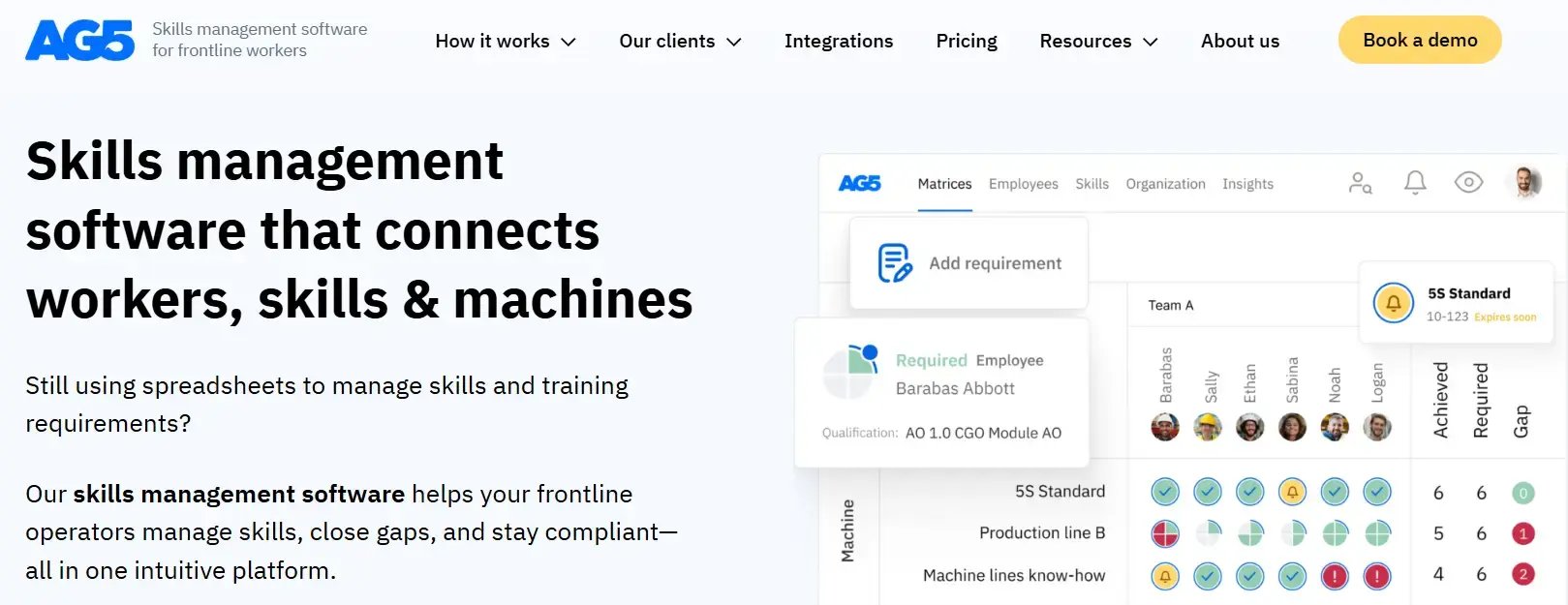
AG5 is a skills management system focused on visualizing, tracking, and managing employee skills and certifications. It helps organizations maintain real-time oversight of workforce competencies, compliance requirements, and operational readiness.
Key Features:
- Skills Matrix Management: Provides a clear and visual skills matrix to track employee competencies and qualifications.
- Certification Tracking: Monitors certifications, expiration dates, and compliance requirements.
- Gap Identification: Highlights skill shortages and training needs across teams and departments.
- Workforce Visibility: Offers real-time insight into team capabilities for better operational planning.
- Reporting and Audit Readiness: Generates reports to support compliance audits and workforce planning.
G2 Rating: 4.6/5 (66 Reviews)
7. Skills Base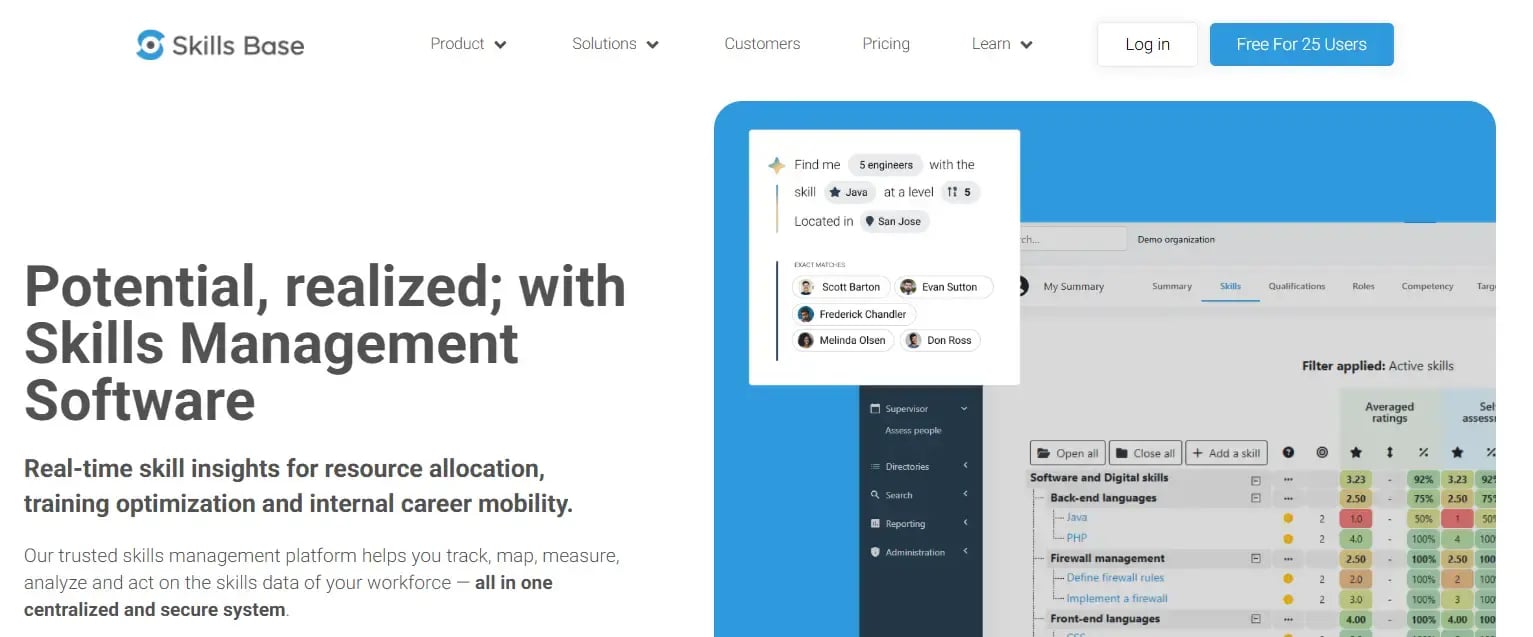
Skills Base is a skills management tool that helps organizations track employee competencies, identify skill gaps, and support workforce planning. It enables businesses to build structured skills frameworks and gain visibility into team capabilities for improved talent development and operational efficiency.
Key Features:
- Skills Matrix Management: Visualizes employee skills, proficiency levels, and competency coverage across teams.
- Skills Gap Analysis: Identifies missing or underdeveloped skills to guide training and hiring decisions.
- Competency Frameworks: Supports customizable frameworks aligned to roles and organizational needs.
- Reporting and Insights: Provides dashboards and reports for workforce planning and audit purposes.
- Training Needs Identification: Highlights development priorities based on skills data.
G2 Rating: 4.5/5 (27 Reviews)
8. edyoucated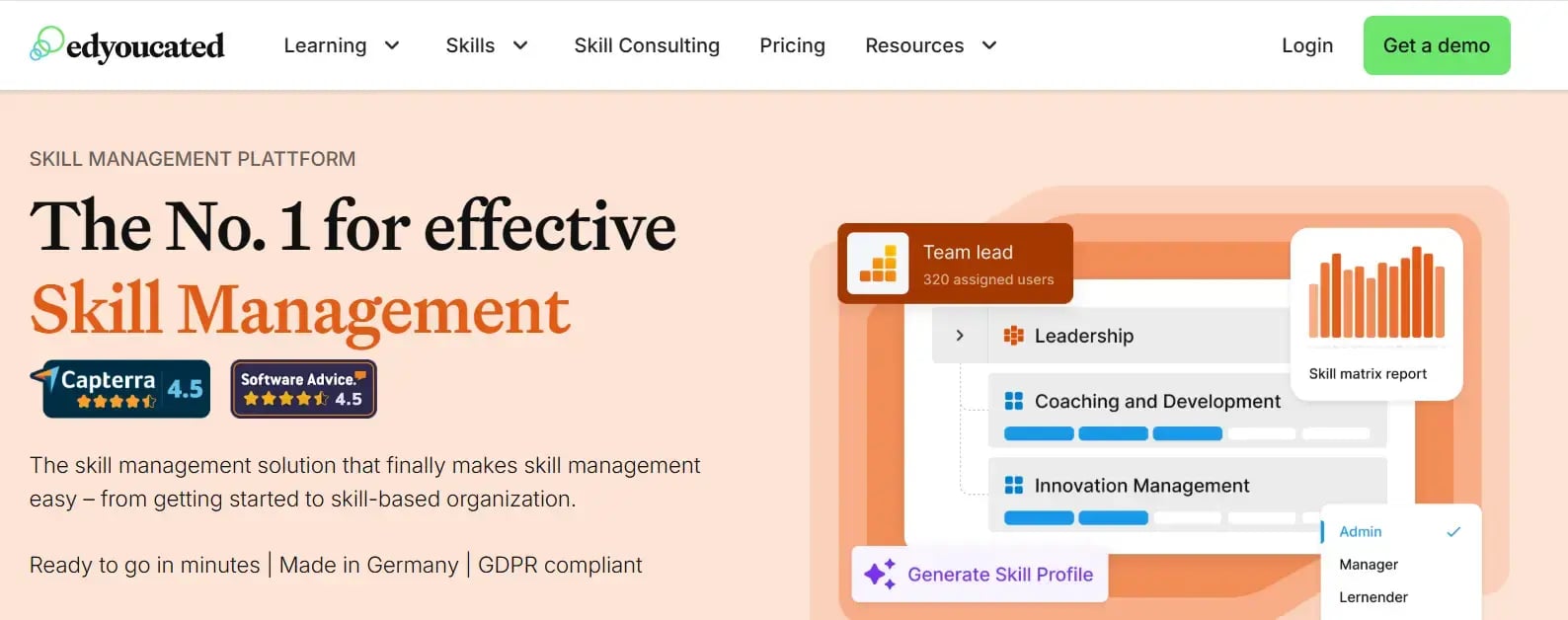
edyoucated is an AI-powered skills management and workforce upskilling platform that helps organizations assess, develop, and manage employee skills. It focuses on personalized learning journeys and data-driven talent development to close skills gaps efficiently.
Key Features:
- AI-Driven Skills Assessment: Evaluates employee capabilities and benchmarks them against role requirements.
- Personalized Learning Paths: Recommends tailored development programs based on individual skill gaps.
- Skills Gap Analysis: Identifies organizational capability gaps to support strategic planning.
- Workforce Analytics: Provides visibility into skill distribution and development progress.
- Learning Integration: Connects skills data with learning resources and external training providers.
G2 Rating: 4.7/5 (10 Reviews)
| Check out our list of skills inventory software to enhance your enterprise's skills management capabilities and drive strategic workforce planning. |
9. TalentGuard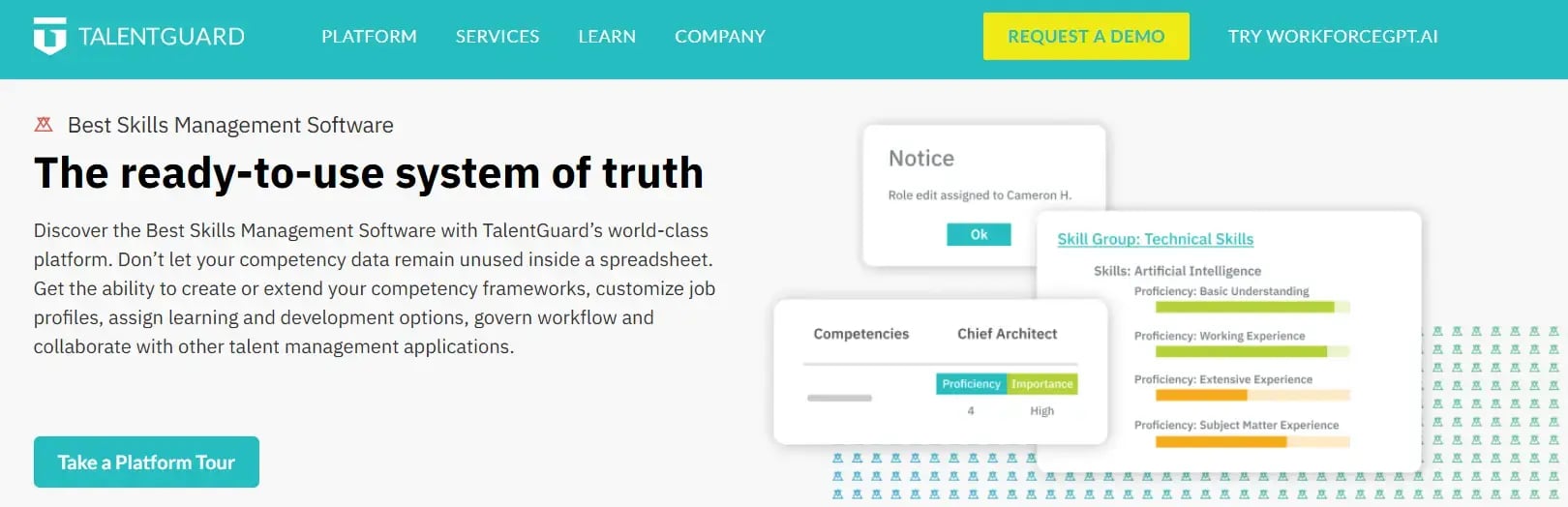
TalentGuard is a workforce intelligence and talent management platform that enables enterprises to manage skills, career pathing, and succession planning. It helps organizations align employee development with business strategy through structured competency frameworks and analytics.
Key Features:
- Skills and Competency Management: Tracks and manages workforce capabilities across roles and departments.
- Career Pathing Tools: Supports internal mobility and career development planning.
- Succession Planning: Identifies future leaders and readiness levels.
- Workforce Analytics: Provides data insights for strategic talent decisions.
- Role Alignment Frameworks: Maps skills to job roles and organizational structures.
G2 Rating: 4.6/5 (4 Reviews)
10. MuchSkills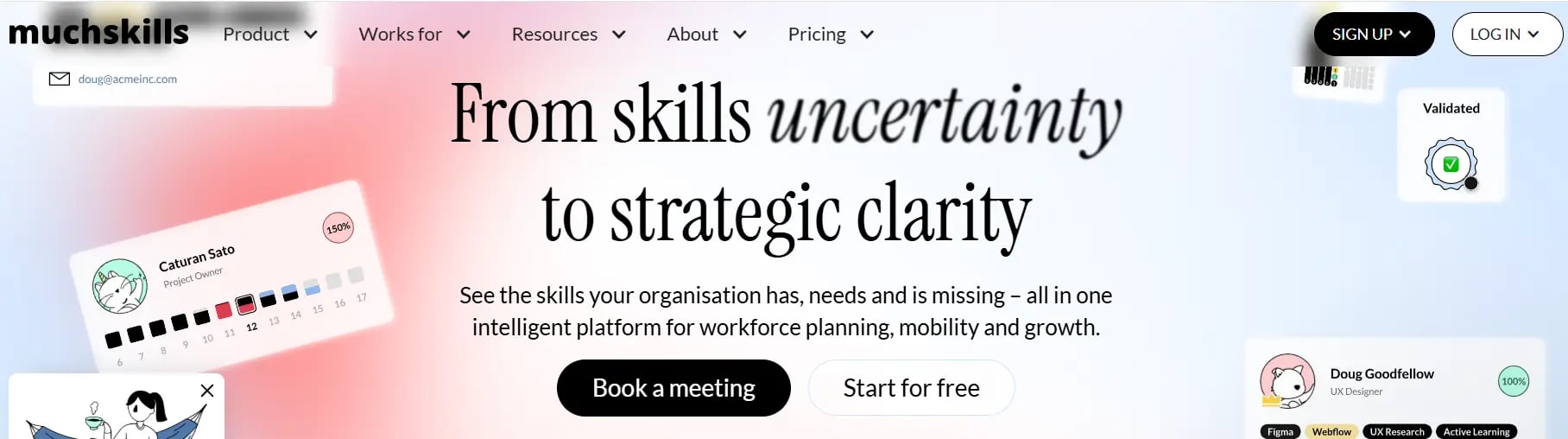
MuchSkills is a visual skills management platform that helps organizations map, analyze, and optimize team capabilities. It focuses on providing intuitive skill visualization tools to improve project staffing, internal mobility, and workforce planning.
Key Features:
- Skills Mapping and Visualization: Offers interactive skill maps for clear workforce visibility.
- Real-Time Skills Overview: Tracks employee competencies and proficiency levels.
- Gap Identification: Highlights missing skills for projects and future initiatives.
- Project Staffing Support: Matches employees to projects based on skill profiles.
- Workforce Insights: Delivers analytics to guide talent allocation and development decisions.
G2 Rating: 4.5/5 (1 Review)
| Discover the 12 best training matrix software to manage enterprise wide skill development with clarity and control. |
Conclusion
Choosing the right skills management software for enterprises requires aligning the platform with your workforce size, complexity, and long-term talent strategy. The ideal solution should deliver real-time skills visibility, AI-driven insights, and actionable gap analysis to support smarter hiring, reskilling, and internal mobility decisions.
As skills-based workforce planning becomes essential for enterprise growth, investing in a scalable and data-driven skills management platform can strengthen talent agility and create a sustainable competitive advantage.
FAQs
1. How does skills management software benefit enterprises?
It enables enterprises to identify skill gaps, improve workforce planning, support internal mobility, and align employee development with business objectives. This leads to better talent utilization and reduced hiring costs.
2. How is skills management software different from an LMS?
A learning management system focuses on delivering training content, while skills management system tracks and analyzes employee skills. Many modern platforms integrate both to connect skills data with learning initiatives.
3. Who offers a centralized skills tracking system for organizations?
Several platforms offer centralized skills tracking, including iMocha, AG5, Skills Base, TalentGuard, MuchSkills, and edyoucated. iMocha stands out for combining validated assessments with AI-driven skills intelligence to maintain an accurate, scalable skills inventory.